
blog
How Florists Make Premium Bouquets And Keep them Fresh longer?
Dec
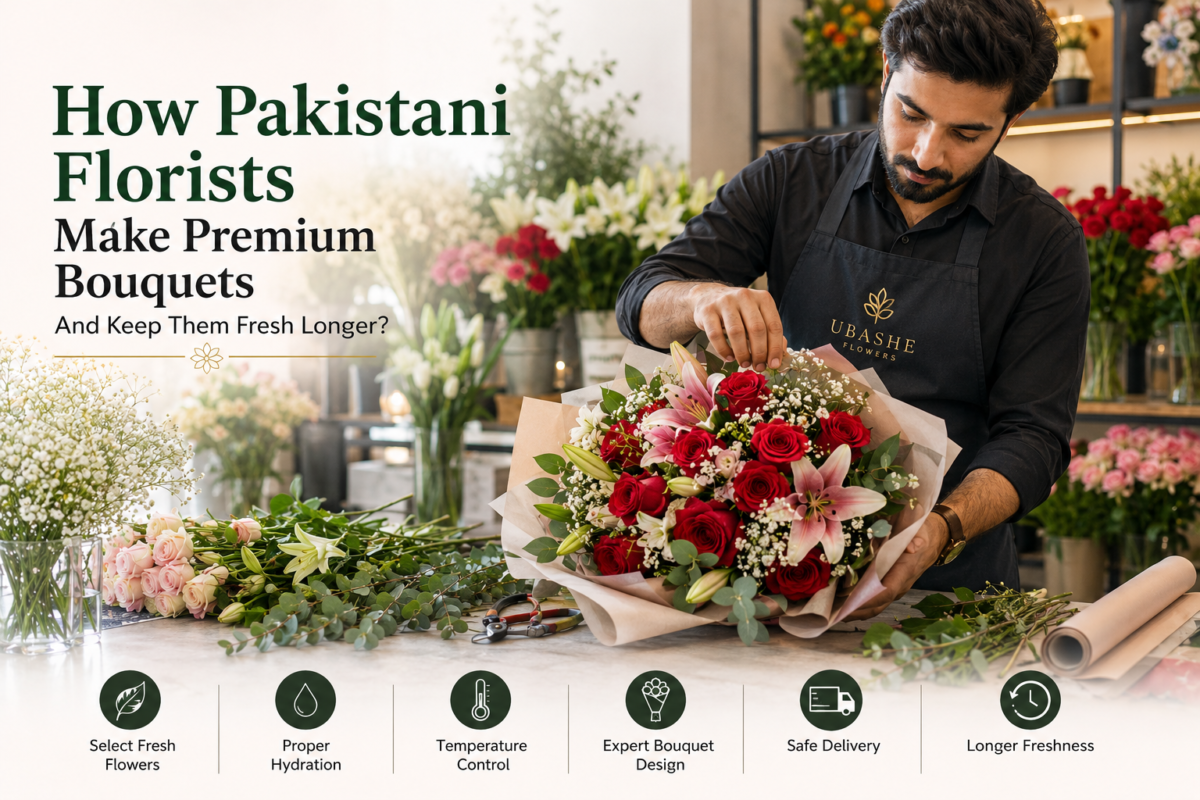
Flowers have long been one of the most meaningful gifts in Pakistan. Whether celebrating a birthday, anniversary, wedding, Mother’s Day, Valentine’s Day, Eid, or welcoming a new baby, a thoughtfully designed bouquet conveys emotions in a way few gifts can. Yet not every bouquet delivers the same experience. Some arrangements remain vibrant for over a week, while others begin to wilt after only a few days.
The difference rarely comes down to luck. Premium florists rely on a combination of horticultural science, careful handling, skilled floral design, and efficient delivery practices to maximize the beauty and lifespan of every bouquet. Every stage from selecting flowers at the right maturity to maintaining hydration and minimizing temperature stress plays a role in determining how long cut flowers remain fresh.
Pakistan’s floral industry has undergone significant evolution over the past decade. Professional florists increasingly combine locally grown flowers with imported varieties, use modern floral preservatives, improve bouquet packaging, and refine same-day delivery systems to ensure customers receive flowers in excellent condition.
This guide explains how experienced Pakistani florists create premium bouquets, the professional techniques they use to preserve freshness, and how these methods help flowers remain beautiful long after delivery.
Freshness Starts Before Flowers Reach the Florist
Many people assume a bouquet’s quality depends entirely on the florist arranging it. In reality, freshness begins much earlier in the supply chain.
Most cut flowers sold in Pakistan originate from two primary sources:
- Locally grown flowers, cultivated in regions with suitable climates for commercial floriculture.
- Imported flowers, supplied through international growers and distributors who transport flowers under controlled conditions.
Professional florists carefully choose suppliers known for maintaining quality standards. Flowers harvested too early may never develop properly, while flowers harvested too late lose valuable vase life before reaching customers.
A reliable supply chain ensures that flowers arrive with strong stems, healthy foliage, and petals free from bruising or dehydration.
Choosing Flowers at the Ideal Bloom Stage
One of the biggest misconceptions is that fully opened flowers are the freshest.
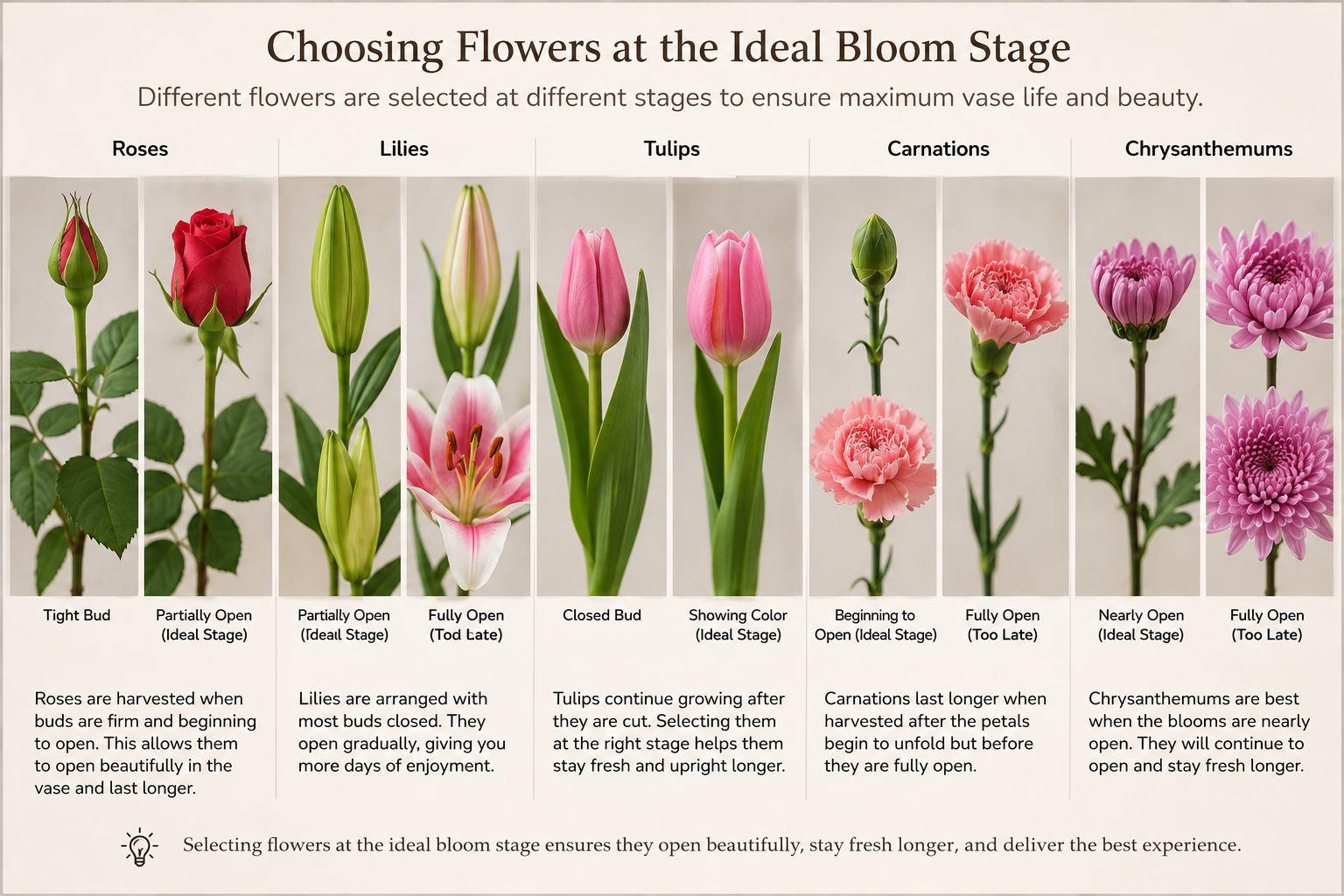
Professional florists usually select flowers that are partially open, allowing them to continue blooming naturally after the bouquet reaches the recipient.
Different flowers have different ideal harvest stages.
Roses
Roses are generally selected when buds are firm and beginning to open. This stage protects delicate petals during transportation while allowing blooms to open gradually in a vase.
Lilies
Lilies are commonly arranged while most buds remain closed. Over the following days, the buds continue opening one after another, extending the bouquet’s display period.
Tulips
Tulips continue growing after they are cut. Florists usually select firm stems with buds showing color but not fully opened.
Carnations
Carnations perform best when harvested after petals begin unfolding but before reaching full bloom.
Chrysanthemums
These flowers typically last longer than many cut flowers and are often harvested once blooms are nearly open.
Selecting flowers at different developmental stages creates a bouquet that changes naturally over time instead of fading all at once.
Inspecting Every Stem Before It Becomes Part of a Bouquet
Experienced florists rarely place flowers directly into an arrangement after unpacking them.
Each stem undergoes inspection to ensure only premium-quality flowers are used.
Florists typically check for:
- Broken stems
- Split stems
- Brown petal edges
- Yellow foliage
- Weak flower heads
- Signs of fungal disease
- Mechanical damage
- Insect damage
- Premature wilting
Removing lower-quality flowers before arranging the bouquet helps maintain consistent appearance and improves overall longevity.
Why Flower Conditioning Is One of the Most Important Steps?
Conditioning is one of the biggest differences between professional florists and inexperienced sellers.
Freshly delivered flowers are rarely arranged immediately. Instead, florists prepare them so they can absorb water efficiently before bouquet construction.
Conditioning usually includes:
- Removing protective packaging.
- Trimming stems with clean, sharp tools.
- Removing leaves that would sit below the waterline.
- Placing flowers into clean buckets of water or floral hydration solution.
- Allowing several hours of hydration in a cool environment before arranging.
This process restores moisture lost during transportation and significantly improves vase life.
Skipping conditioning often results in flowers that wilt much sooner.
The Science Behind Recutting Flower Stems
Customers often hear that stems should be cut at a 45-degree angle. While angled cuts can slightly increase the exposed surface area and may help prevent the stem from sitting flat against the bottom of a vase, research suggests the most important factor is making a fresh, clean cut with a sharp tool.
After flowers are harvested, tiny air bubbles and natural wound responses can reduce water movement through the stem. Recutting removes the sealed portion, allowing the xylem the plant’s water-conducting tissue—to take up water more effectively.
Professional florists typically trim stems immediately before conditioning and often trim them again before final arrangement if the flowers have been stored for several days.
Hydration Is More Than Simply Adding Water
Water alone is not enough to maximize the life of cut flowers.
Professional florists carefully manage hydration using clean containers and floral preservative solutions designed specifically for cut flowers.
A commercial floral preservative generally contains three key components:
- Sugar, which provides energy because cut flowers can no longer produce enough through photosynthesis.
- An acidifier, which lowers the pH of the water and improves water uptake.
- A biocide, which slows bacterial growth that can clog stems.
This balanced solution helps flowers remain hydrated and delays premature aging more effectively than plain water.
Why Cleanliness Matters
One of the biggest enemies of cut flowers is bacteria.
Even a small amount of organic material in dirty buckets or vases can encourage bacterial growth. As bacteria multiply, they form biofilms that block the xylem vessels inside flower stems, reducing water uptake and causing flowers to wilt sooner.
Professional florists reduce this risk by:
- Cleaning buckets frequently.
- Using sanitized cutting tools.
- Replacing water regularly.
- Removing decaying leaves.
- Avoiding contaminated storage containers.
Good sanitation is one of the simplest yet most effective ways to extend flower life.
Temperature Control: The Hidden Secret Behind Long-Lasting Flowers
Temperature has a direct impact on how quickly flowers age.
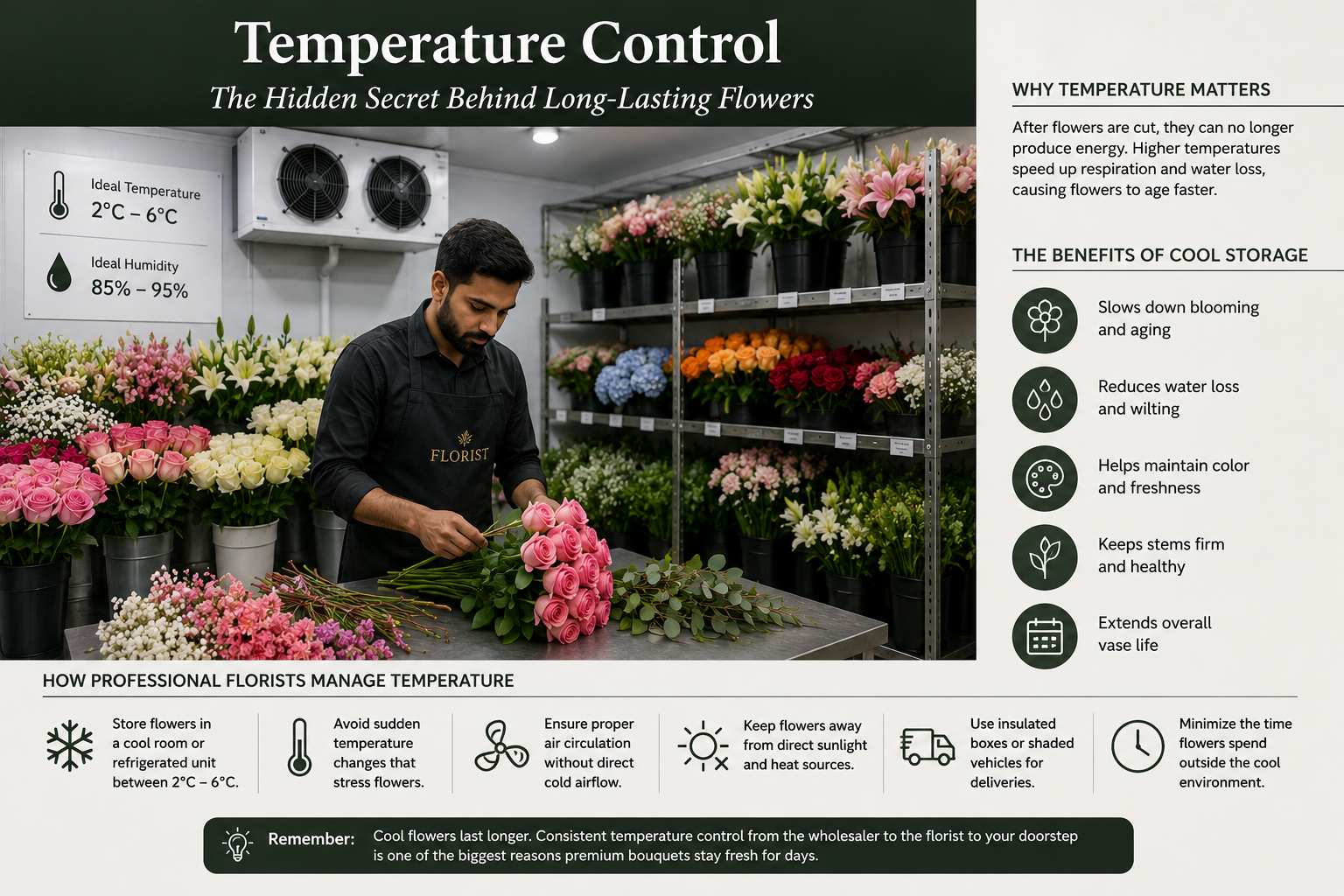
Higher temperatures increase respiration and water loss, causing flowers to open faster and shorten their vase life. Cooler temperatures slow these natural processes and help flowers stay fresh longer.
For this reason, professional florists keep flowers in cool storage whenever possible and minimize the time bouquets spend exposed to heat during preparation and transportation.
This is particularly important during Pakistan’s warmer months, when high temperatures can accelerate dehydration if flowers are left in direct sunlight or hot vehicles.
Maintaining a consistent cool environment throughout handling and delivery helps preserve color, stem strength, and bloom quality.
Not Every Flower Is Stored the Same Way
Although keeping flowers cool is generally beneficial, different flower species have different storage needs.
For example:
- Roses tolerate refrigerated storage well.
- Tulips continue growing after harvest and require careful positioning to maintain straight stems.
- Tropical flowers, such as orchids, are more sensitive to chilling and are not stored as cold as many temperate flowers.
Professional florists adjust their handling methods according to the flower species, helping each variety achieve its maximum vase life instead of treating every flower the same.
Designing a Bouquet That Looks Beautiful from Every Angle
Creating a premium bouquet is both an artistic and technical process. Professional florists don’t simply gather flowers and tie them together. Every bouquet is carefully composed to achieve balance, depth, and visual harmony.
Most florists begin by selecting a focal flower, which becomes the centerpiece of the arrangement. Popular focal flowers in Pakistan include roses, lilies, hydrangeas, orchids, and sunflowers.
Around these focal flowers, they add secondary flowers that provide volume and color variation. Carnations, chrysanthemums, alstroemeria, spray roses, and tulips are commonly used for this purpose.
Finally, filler flowers such as baby’s breath (Gypsophila), statice, waxflower, or limonium soften empty spaces and give bouquets a fuller appearance without overwhelming the main blooms.
Greenery plays an equally important role. Eucalyptus, leatherleaf fern, Italian ruscus, and other foliage create texture, define the bouquet’s shape, and help individual flowers stand out.
Professional florists continuously rotate the bouquet while arranging it, ensuring it appears attractive from every viewing angle rather than only from the front.
Why Color Harmony Matters
Premium bouquets are carefully designed using principles of color harmony rather than random color combinations.
Some bouquets use monochromatic palettes, featuring different shades of a single color for a sophisticated appearance.
Others combine analogous colors, such as pink, peach, and lavender, to create a soft and elegant arrangement.
For celebrations like birthdays or congratulations, florists often choose complementary color combinations, such as yellow and purple or red and white, to create contrast and visual energy.
Beyond aesthetics, colors also carry symbolic meanings:
- Red roses represent love and passion.
- Pink flowers express admiration and gratitude.
- White flowers symbolize purity, sympathy, and new beginnings.
- Yellow flowers convey happiness and friendship.
- Purple flowers often represent elegance and admiration.
Choosing flowers with appropriate symbolism helps create bouquets that feel more thoughtful and personal.
Local Flowers vs. Imported Flowers in Pakistan
Many customers believe imported flowers are always superior. In reality, both locally grown and imported flowers have advantages.
Locally grown flowers often arrive at florists much sooner after harvest, reducing transportation time and allowing excellent freshness when handled properly. Pakistan produces a wide range of seasonal flowers, including roses, gladiolus, marigolds, tuberoses, chrysanthemums, and carnations.
Imported flowers expand the variety available throughout the year. Premium roses from Kenya or Ecuador, tulips from the Netherlands, orchids from Thailand, and specialty flowers from other countries allow florists to create luxury arrangements regardless of the local growing season.
Rather than focusing solely on origin, experienced florists prioritize overall quality, freshness, stem strength, and proper postharvest handling.
Packaging That Protects Flowers During Delivery
Packaging is more than decorative wrapping—it protects flowers from damage during transportation.
Professional florists generally use multiple layers, including:
- Waterproof sleeves that help retain moisture.
- Protective wrapping paper that shields delicate petals.
- Tissue paper to prevent abrasion.
- Strong ribbon or twine to stabilize the bouquet.
- Supportive bouquet structure that keeps stems secure.
Some florists also use water-filled floral wraps or hydration packs for longer deliveries to reduce moisture loss before the bouquet reaches its destination.
Proper packaging helps flowers arrive in the same condition they left the workshop.
Same-Day Delivery Helps Preserve Freshness
One advantage of professional flower delivery is reducing the amount of time flowers spend outside ideal storage conditions.
Many premium florists in Pakistan prepare bouquets shortly before dispatch instead of arranging them many hours in advance.
For same-day delivery, florists typically:
- Keep flowers hydrated until assembly.
- Arrange bouquets close to dispatch time.
- Protect bouquets from direct sunlight.
- Secure arrangements inside delivery vehicles to prevent movement.
- Minimize unnecessary delays during transportation.
Reducing handling time and maintaining careful transportation practices help preserve flower quality until delivery.
How Customers Can Keep Their Bouquets Fresh at Home
Professional florist care doesn’t end at delivery. The way flowers are treated at home has a significant impact on how long they remain attractive.
To maximize vase life:
- Trim approximately 1–2 centimeters from each stem using clean, sharp scissors or pruners before placing flowers in water.
- Use a thoroughly cleaned vase to reduce bacterial contamination.
- Fill the vase with fresh water and add the flower food provided by the florist, if available.
- Remove any leaves that would sit below the waterline.
- Replace the water every two or three days, or sooner if it becomes cloudy.
- Recut the stems whenever the water is changed.
- Remove wilted flowers promptly to help maintain the appearance of the bouquet and reduce decay.
These simple steps can significantly extend the enjoyment of fresh flowers.
Keep Flowers Away from Heat and Ripening Fruit
Direct sunlight, heaters, air conditioners blowing directly on flowers, and hot rooms accelerate water loss and shorten vase life.
Another often-overlooked factor is ethylene, a naturally occurring plant hormone released by many ripening fruits such as bananas, apples, pears, and avocados.
Ethylene speeds up aging in many cut flowers, causing petals to wilt, flowers to open too quickly, or blooms to drop prematurely.
Keeping bouquets away from fruit bowls can help extend their freshness.
Flower-Specific Care Tips
Different flowers respond differently after cutting, so experienced florists adapt their care accordingly.
Roses
Roses benefit from regular stem recutting and clean water. Guard petals on the outer layer may appear slightly bruised but are often intentionally left to protect the inner petals during transport. Florists usually remove these before sale if necessary.
Lilies
Lilies continue opening over several days. Once individual flowers open, many florists recommend carefully removing the pollen-bearing anthers to reduce pollen stains and slightly prolong the bloom’s appearance.
Tulips
Tulips naturally continue growing and bending toward light after harvest. Rotating the vase occasionally helps maintain a balanced appearance.
Carnations
Carnations are among the longest-lasting cut flowers and perform well when kept in cool conditions with fresh water.
Orchids
Orchids prefer moderate temperatures and should not be exposed to excessively cold storage. Gentle handling is essential because their petals bruise easily.
Baby’s Breath
Baby’s breath generally has excellent vase life when kept dry above the waterline and paired with clean water. Because of its tiny flowers, good airflow also helps maintain freshness.
Chrysanthemums
Chrysanthemums are naturally long-lasting flowers and are valued for their durability, making them popular in mixed bouquets.
Common Flower Care Myths
Many home remedies circulate online, but not all are supported by research.
Myth: Aspirin always keeps flowers fresh.
Although aspirin is often recommended as a home remedy, research on cut roses has shown that it is not a reliable substitute for commercial floral preservatives and may even shorten vase life. Commercial flower food remains the more consistent choice for extending freshness.
Myth: Sugar alone makes flowers last longer.
While sugar provides energy, using sugar without a disinfectant can encourage bacterial growth.
Myth: A copper coin preserves flowers.
There is little scientific evidence that placing a coin in a vase meaningfully extends vase life.
Myth: Ice water is best for every flower.
Different flowers have different hydration preferences. Clean water and appropriate storage conditions matter far more than extremely cold water.
Commercial floral preservatives remain the most reliable option for extending vase life because they combine sugar, an acidifier, and antimicrobial ingredients in balanced proportions.
Frequently Asked Questions
How long should a premium bouquet last?
Most professionally prepared bouquets remain attractive for approximately 5 to 10 days, depending on the flower varieties used and the care they receive at home. Some flowers, such as carnations and chrysanthemums, may last even longer.
Why do florists remove leaves from the bottom of stems?
Leaves submerged in water decompose quickly, encouraging bacterial growth that can shorten the life of cut flowers.
Should flowers be refrigerated at home?
Most homes do not need dedicated refrigeration for bouquets. Keeping flowers in a cool room away from direct sunlight is usually sufficient. Household refrigerators can also expose flowers to ethylene from stored fruit and vegetables.
Why do florists use flower food?
Flower food provides nutrients, improves water uptake, and helps reduce bacterial growth, allowing flowers to remain fresh longer than plain water alone.
Conclusion
Creating a premium bouquet involves far more than arranging attractive flowers. Behind every elegant design is a carefully managed process that includes selecting quality blooms, conditioning stems, maintaining cleanliness, controlling temperature, using professional floral preservatives, and transporting bouquets with care.
Professional Pakistani florists combine traditional floral artistry with modern postharvest practices to ensure customers receive bouquets that remain beautiful for as long as possible. Whether using locally grown seasonal flowers or carefully sourced imported varieties, attention to detail at every stage helps maximize freshness and presentation.
If you’re looking for beautifully arranged Flower Bouquets for birthdays, anniversaries, Valentine’s Day, Mother’s Day, weddings, or other special occasions, explore Ubashe’s collection of fresh floral arrangements. If you’re unsure which bouquet to choose, read our Complete Guide to Buying Flower Bouquets in Pakistan to learn how to select the right flowers for every occasion and recipient.